

Understanding Mindfulness Therapy: Building Awareness, Calm, and Intentional Living
Starting therapy often comes with questions about what it will feel like and how it can help. One approach we’ll likely explore together is Mindfulness Therapy. Mindfulness is all about learning to be fully present in the moment, noticing your thoughts, feelings, and physical sensations without judgment.
I often reference a simple framework for mindfulness in our sessions as a reminder to Pause, Notice, Accept.
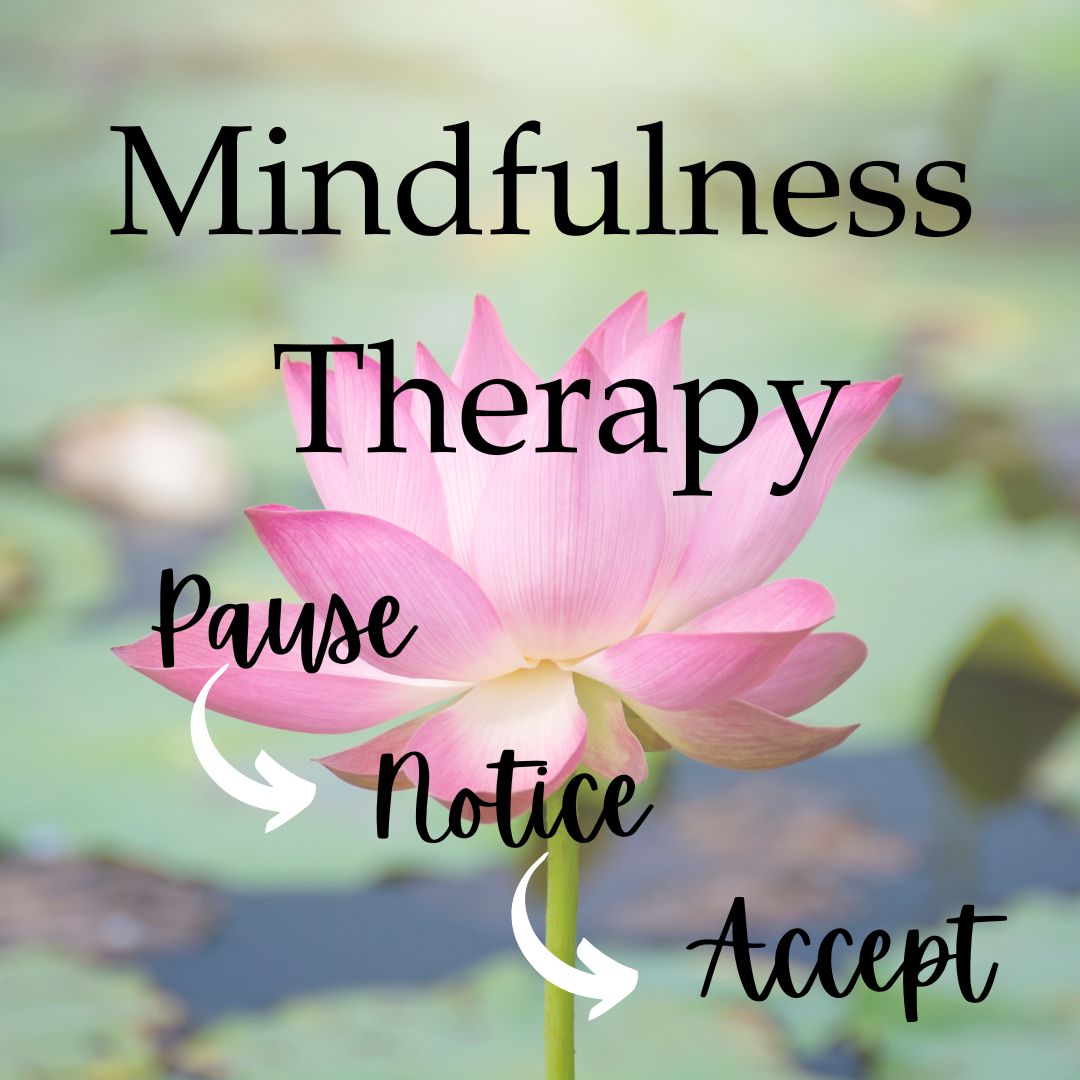
This framework helps you practice awareness, reduce stress, and respond to life intentionally rather than reacting automatically.
Mindfulness therapy is practical and adaptable. It’s not about clearing your mind completely or “getting rid of” difficult feelings. It’s about learning to observe them, understand them, and create space to choose how to respond.
What Mindfulness Therapy Looks Like in a Session
Mindfulness therapy is experiential, meaning you’ll actively practice skills during sessions. Here’s what you can expect:
Guided Practice – We may start with short, guided exercises to focus attention on the breath, body sensations, or your immediate surroundings. These exercises help you notice what’s happening in the present moment.
Exploring Thoughts and Emotions – Through mindfulness, you learn to observe your thoughts and feelings without judgment. This creates awareness of patterns and automatic reactions that might cause stress or conflict.
Skill Building – You’ll develop strategies for integrating mindfulness into daily life. For example, pausing before responding in a heated conversation, noticing tension in your body during stress, or practicing mindful eating or movement.
Reflection and Application – We’ll discuss your experiences and how to use mindfulness to support goals such as reducing anxiety, improving relationships, or managing overwhelming emotions.
Benefits of Mindfulness Therapy
Mindfulness therapy can be applied to many areas of life:
Stress and Anxiety Management – By focusing on the present, you can reduce rumination and prevent worry from spiraling.
Emotional Regulation – Notice your emotions without being controlled by them, allowing for calmer, intentional responses.
Improved Relationships – Mindful listening and awareness of reactions can help you communicate more effectively and compassionately.
Self-Compassion and Awareness – Mindfulness encourages curiosity and acceptance of yourself, rather than judgment.
Applying Mindfulness in Daily Life
Here’s a simple example of how mindfulness might look in real life:
You notice frustration rising during a meeting. Instead of immediately reacting, you take a moment to pause, breathe, and notice your physical sensations and thoughts. This allows you to respond thoughtfully rather than impulsively. Over time, these small pauses build greater awareness, self-control, and emotional resilience.

The breeze through the trees. The feel of the sun on your arms. The smell of the fog clearing from the air.
Why Start Mindfulness Therapy with Me
In our sessions, we’ll tailor mindfulness practices to your needs and goals. Whether it’s managing stress, navigating relationships, or increasing focus, mindfulness therapy helps you:
Become more aware of your thoughts and emotions.
Pause before reacting, leading to healthier responses.
Build resilience and reduce stress in everyday situations.
Strengthen relationships and communicate with clarity and empathy.
Mindfulness therapy isn’t about changing who you are; it’s about helping you live more fully, intentionally, and in alignment with your values.
If you’re ready to learn practical mindfulness tools that support your mental health, relationships, and overall well-being, I invite you to reach out and schedule a session with me. Together, we’ll practice skills that you can use every day to feel more present, calm, and in control.
